You Know the House Always Wins — So Why Can't You Stop Spinning?
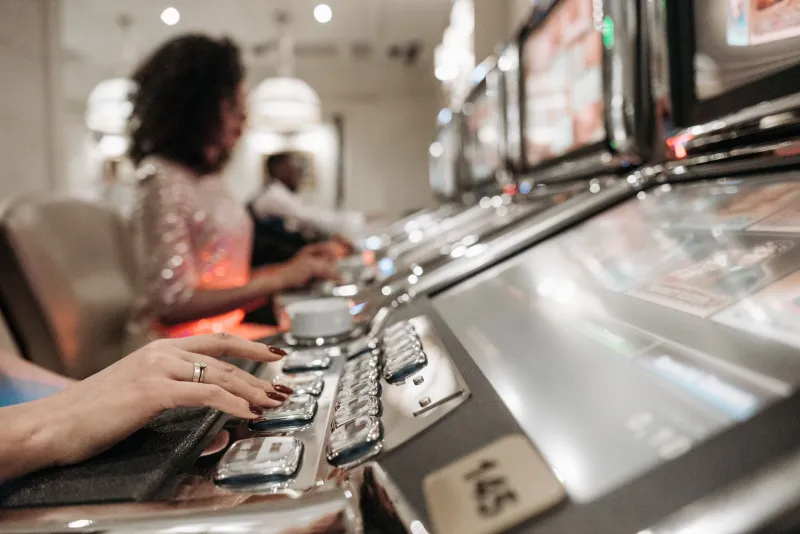
Ask any regular pokies player whether the machine is designed to take more money than it gives back, and most will shrug and say yeah, obviously. It's not a secret. The house edge is built into every spin, RTP percentages are publicly available, and nobody walks into a casino — or loads up an online pokies site — under the genuine belief that they're going to retire off the winnings.
So why does knowing all of that change absolutely nothing?
That question sits at the centre of a surprisingly rich area of psychology, and the answers say a lot about how human brains are wired — not just how gamblers think, but how all of us process risk, reward, and the stubborn hope that this time might be different.
The Gap Between Knowing and Feeling
There's a concept in behavioural psychology called the intention-action gap — the space between what we rationally understand and what we actually do. It shows up everywhere. We know that eating well matters, but we still grab the hot chips. We know that doom-scrolling at midnight wrecks our sleep, but here we are at 1am.
With pokies, the gap is particularly pronounced because the game is specifically engineered to exploit it.
Online pokies aren't just games of chance — they're finely tuned psychological experiences. The sounds, the visual design, the pacing of wins and losses, the celebratory animations — all of it is crafted to keep players engaged at a level that operates below conscious decision-making. By the time your rational brain catches up and says hey, maybe that's enough, you've already tapped to deposit again.
Near-Misses: The Feature That Messes With Your Head the Most
If there's one mechanic that best illustrates the pokies paradox, it's the near-miss.
You spin. Two jackpot symbols land in a row. The third lands just one position off. Your heart rate spikes. You feel like you almost had it.
But here's the thing — you didn't almost have anything. In terms of outcome, a near-miss is identical to landing three completely different symbols. You lost. Full stop. And yet the brain doesn't process it that way.
Research consistently shows that near-misses activate the same reward circuitry as actual wins. The brain releases dopamine, interprets the experience as meaningful, and pushes you to try again. Game designers know this, which is why near-miss frequency is something that gets carefully calibrated in modern pokies.
For players, the cruel irony is that the more near-misses you experience, the more convinced you become that a win is imminent — even though every spin is completely independent of the last.
The Illusion of Control (And Why Pressing the Button Feels Important)
Online pokies give players a button to press. Or a screen to tap. That interaction feels meaningful, even though it isn't — the outcome is determined by a random number generator the moment you initiate a spin, not by how hard you tap or how long you hold.
But that sense of agency matters psychologically. Studies on what's called the illusion of control show that people consistently overestimate their influence over random outcomes when they're actively involved in the process. Pressing a button feels different to watching a machine run on its own, even when the result is identical.
This is part of why features like autoplay can actually feel less satisfying to some players — removing the button-press removes that false sense of participation, and with it, some of the psychological engagement that keeps people spinning.
Selective Memory: Wins Stick, Losses Fade
Another big piece of the puzzle is how we remember our gambling history.
Ask someone to recall their pokies sessions over the last month, and they'll usually remember the wins with vivid clarity — the big payout, the bonus round that went off, the time they hit three scatters in a row. The losses? Those blur together into a vague sense of having spent some money, but nothing specific.
This isn't dishonesty. It's just how memory works. Emotionally charged events get encoded more strongly, and wins — even small ones — carry a hit of excitement that makes them memorable. Losses, particularly the slow bleed of repeated small losses, don't create the same emotional spike and therefore don't get stored with the same intensity.
The result is a distorted personal narrative. Players genuinely believe they win more often than they do, because their memory of winning is sharper than their memory of losing. That skewed perception makes it much easier to justify another session.
Why Awareness Alone Doesn't Fix Much
Here's where it gets uncomfortable: education about gambling odds, house edge, and RTP — while genuinely useful — doesn't reliably change player behaviour on its own.
Studies have tested this. Telling players exactly how much a machine pays back on average doesn't significantly reduce how long they play or how much they spend. The cognitive biases described above operate at a level that rational information struggles to reach.
This isn't a reason to give up on education — understanding how pokies work is still valuable, and awareness of these psychological traps is the first step in being able to identify them in yourself. But it does explain why responsible gambling tools like session limits, deposit caps, and cooling-off periods exist. They don't rely on willpower or rational decision-making in the heat of the moment. They create structural barriers that work even when your brain is in full near-miss dopamine mode.
Playing Smarter Starts With Playing Honest
None of this means you can't enjoy online pokies as entertainment. Plenty of Australians do exactly that — they set a budget, treat the spend like the cost of a night out, and walk away when the money's gone without chasing losses.
But that approach requires a particular kind of honesty with yourself. Acknowledging that the machine is designed to keep you playing. Recognising that the near-miss that just happened means nothing. Understanding that your memory of winning is probably more vivid than the reality of your win rate.
The paradox isn't really about pokies being irrational — it's about humans being human. We're wired to seek patterns, to feel agency, to remember highs more clearly than lows. Pokies are just very good at using all of that against us.
Knowing that won't stop the reels from being fun. But it might just change how long you let them spin.
If you feel like your pokies play is getting away from you, the National Gambling Helpline is available 24/7 on 1800 858 858, or visit gamblinghelponline.org.au.