Locked In and Logging On: The Quiet Pokies Boom That Happened Behind Closed Doors
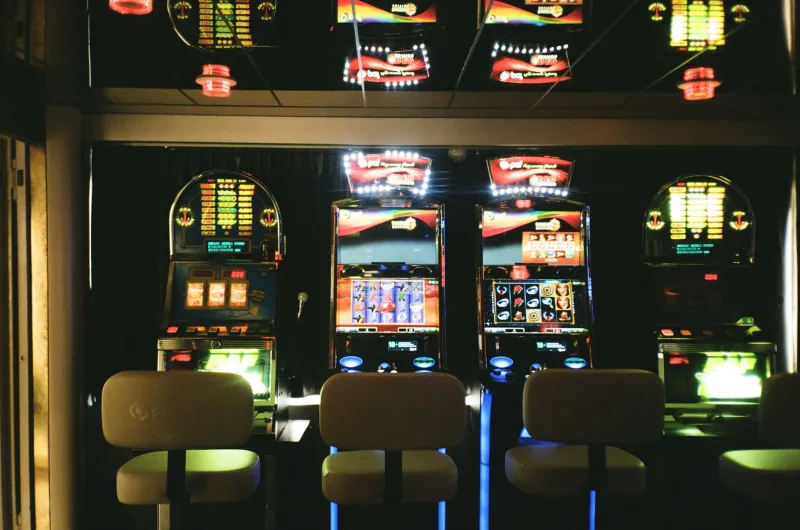
For decades, the pokies machine was a deeply physical thing. You drove to the pub, grabbed a schooner, slid into a stool, and fed coins — or eventually notes and cards — into a cabinet that flashed and beeped under fluorescent light. It was social, almost ritualistic. Then, in March 2020, the doors closed.
Australia's COVID-19 lockdowns didn't just strand people at home. They quietly dismantled one of the country's most deeply embedded gambling habits and rebuilt it in a completely different form. Online pokies platforms saw traffic surges that no marketing campaign could have manufactured. And the players who showed up? Many of them had never seriously considered digital gambling before.
The Numbers Don't Lie — But They Do Surprise
In the months following venue closures across New South Wales, Victoria, and Queensland, several Australian online gambling operators reported registration spikes ranging from 30 to over 60 percent compared with the same period in the prior year. The Australian Communications and Media Authority (ACMA) noted increased complaints and activity across licensed and unlicensed platforms alike — a clear signal that demand wasn't just growing, it was overflowing.
What made this particularly striking was who was showing up. Younger players, women in higher proportions than traditional venue data would suggest, and older Australians who'd never previously engaged with digital platforms were all signing up. The lockdown essentially handed online casinos a demographic expansion they hadn't been able to achieve through years of targeted advertising.
The pokies had always been accessible. Lockdowns just made the physical alternative disappear.
Home Isolation and the Psychology of the Spin
There's a reason pokies work so effectively as a stress response. The repetitive nature of spinning reels, the near-constant low-level reward feedback, and the sense of control — however illusory — over outcomes creates a kind of mental cocoon. When the outside world becomes overwhelming or monotonous, the machine offers a predictable loop.
Lockdowns handed people an unusual combination of psychological conditions: enforced boredom, anxiety about the future, disrupted routines, and a sudden collapse of social infrastructure. Pubs weren't just gambling venues — they were community spaces. When they closed, people lost more than just access to a pokies cabinet. They lost the social scaffolding that surrounded it.
For some, online pokies filled multiple voids at once. There was entertainment, yes, but also the faint simulation of the pub experience — sound effects, flashing visuals, the rhythm of a session. It wasn't the same. But during lockdown, close enough had enormous value.
Digital Platforms Were Ready. Players Weren't Expecting to Need Them.
One of the more interesting dynamics of the lockdown gambling surge was how unprepared most new players were for the digital experience. Venue pokies players generally didn't think of themselves as online gamblers. The shift required learning new platforms, navigating payment systems, and trusting digital transactions in a way that many hadn't previously considered.
This is where payment technology played a surprisingly important role. The rise of instant bank transfer systems — including PayID — made depositing into online casino accounts significantly less friction-heavy. No credit card details to enter repeatedly, no waiting days for funds to clear. You linked your bank account, used your phone number or email as an identifier, and money moved almost instantly.
For someone sitting at home, already anxious, already unfamiliar with the platform, that kind of frictionless entry point mattered. It reduced the hesitation barrier that might otherwise have sent a prospective player back to waiting for the venues to reopen.
What Venue Closures Actually Revealed
Here's the uncomfortable insight that the lockdown data exposed: Australia's relationship with pokies wasn't nearly as tied to the venue as the industry had long assumed.
For years, the argument from gambling reform advocates was that physical access drove problem gambling — that proximity to a pub pokies machine was the key risk factor. And there's genuine truth in that. But the lockdown period showed that when you removed physical access entirely, a substantial portion of the appetite simply migrated online rather than dissipating.
This wasn't universally the case. Some players did stop gambling when venues closed, and their cessation was genuinely linked to removing the physical trigger. But a significant cohort demonstrated that the habit was more durable than the location. They found the digital equivalent and adapted.
For policymakers, that's a complicated finding. It suggests that venue-based harm reduction measures, while important, don't capture the full picture of how Australians engage with pokies.
The Session Behaviour Shift
Another pattern that emerged during lockdowns was a change in how people played, not just where. Pub pokies sessions are naturally bounded by social context — you have a drink, you play for a bit, someone interrupts the session, closing time arrives. There are external limiters built into the experience.
At home, those limiters vanish. Sessions that might have run 45 minutes at a venue could stretch for hours. Players reported losing track of time in ways that surprised even themselves. Without the ambient social cues — the noise of the venue winding down, a mate suggesting you head off — the natural stopping points dissolved.
Online platforms, to their credit, introduced more prominent session timers and deposit limit prompts during this period, partly in response to regulator pressure. But the fundamental architecture of home-based gambling — private, uninterrupted, always available — created conditions that were genuinely different from anything the pub environment had produced.
What Stuck After the Doors Reopened
When venues eventually reopened, something interesting happened: they didn't fully reclaim their pre-lockdown audience. A portion of the players who had migrated online simply stayed there.
Convenience had won. Not for everyone — plenty of players walked straight back into their local RSL or pub the day restrictions lifted. But a meaningful cohort had discovered that online pokies suited their lifestyle better. They could play on their lunch break, after the kids went to bed, on a Saturday morning without having to drive anywhere. The flexibility was genuinely appealing.
This wasn't a total industry transformation, but it was a permanent structural shift. Online gambling's share of Australia's total gambling spend, which had been growing steadily for years before COVID, accelerated through the lockdown period and settled at a higher baseline afterwards.
The Lockdown Chapter Isn't Fully Closed
What the COVID-19 lockdowns ultimately did was run an unplanned, large-scale experiment on Australian gambling behaviour. The results were messy, revealing, and in some cases genuinely concerning. They showed that digital platforms could absorb enormous demand quickly, that payment technology had become a key enabler of access, and that the social context of venue gambling was both more and less important than anyone had previously understood.
For anyone playing online pokies today, that history is worth knowing. The platform you're using probably grew significantly during those locked-down months. The payment rails that make depositing seamless were refined during that period. And the habits — good and bad — that players formed in isolation are still playing out in sessions happening right now, across the country, on phones and laptops, without a schooner in sight.