Your Brain on Pokies: Why Playing Tired or After a Few Drinks Costs You More Than You Think

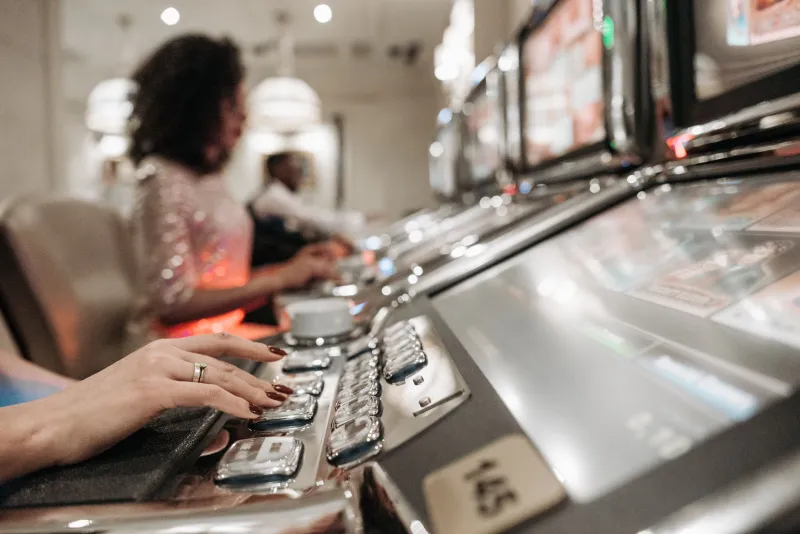
Let's be straight about something: a lot of online pokies sessions in Australia happen late at night, and a fair chunk of those happen after a few beers at the pub or a glass or three of wine at home. That's not a judgement — it's just reality. Digital gambling is accessible exactly when and where people tend to relax, and relaxation in Australian culture often involves a drink.
The problem isn't the drink itself, or even the hour. The problem is what those things do to the specific cognitive functions you rely on to gamble responsibly. And the changes are more significant — and more predictable — than most people realise.
What Fatigue Actually Does to Your Gambling Brain
Sleep deprivation and general tiredness don't just make you feel slower. They selectively impair the parts of your brain responsible for risk assessment, impulse control, and long-term thinking — the exact functions you need most when you're deciding whether to increase your bet or call it a session.
The prefrontal cortex, the region of the brain most involved in decision-making and self-regulation, is disproportionately affected by fatigue. Studies have shown that even moderate sleep restriction (getting six hours instead of eight for a few nights) produces cognitive impairments equivalent to being legally drunk. Your reaction times slow, your ability to evaluate probabilities worsens, and critically, your capacity to override impulsive decisions drops significantly.
In pokies terms, this translates to a few very specific patterns:
- Chasing losses becomes more likely. The rational part of your brain that says this isn't working, cut your losses is running on reduced capacity. The emotional part that says one more spin and I'll get it back faces less internal resistance.
- Bet sizing becomes less disciplined. Fatigued players are more likely to increase bets without a clear reason, responding more to frustration than to strategy.
- Sessions run longer. Tired brains are worse at noticing the passage of time and worse at initiating the decision to stop.
Alcohol: The Confidence Boost That Costs You
Alcohol's effect on gambling behaviour is well-documented, and it's not subtle. Even at low to moderate levels of consumption — the kind that feels like it's just loosening you up — alcohol produces measurable changes in risk tolerance and loss sensitivity.
Here's the core mechanism: alcohol suppresses activity in the prefrontal cortex (yes, the same region affected by fatigue) while simultaneously increasing dopamine release in the brain's reward pathways. The result is a brain that's more excited by potential wins and less bothered by losses. That combination is genuinely dangerous in a gambling context.
Specifically, research consistently shows that mildly intoxicated gamblers:
Take bigger risks. The subjective sense of caution that normally moderates bet sizing is reduced. What feels like a reasonable bet at 10pm after two drinks might look very different on your bank statement the next morning.
Respond less to losses. Normally, a losing streak triggers a kind of cognitive alarm — something isn't working here. Alcohol dampens that signal, making it easier to keep spinning through losses that a sober version of you would have walked away from.
Are more susceptible to the near-miss effect. That feeling when the symbols line up almost-but-not-quite and your brain screams so close! — alcohol amplifies that response. Near-misses feel more meaningful and more compelling after a few drinks, which is exactly the opposite of what rational gambling requires.
The Compounding Problem: Tired AND Drinking
Here's where it gets genuinely concerning for late-night pokies players. Fatigue and alcohol don't just add together — they interact. Alcohol impairs sleep quality, so even if you've been drinking and you feel relaxed, your brain is working harder than usual. Combine that with actual tiredness from a long day, and you've got a cognitive environment that's about as far from optimal decision-making as you can get.
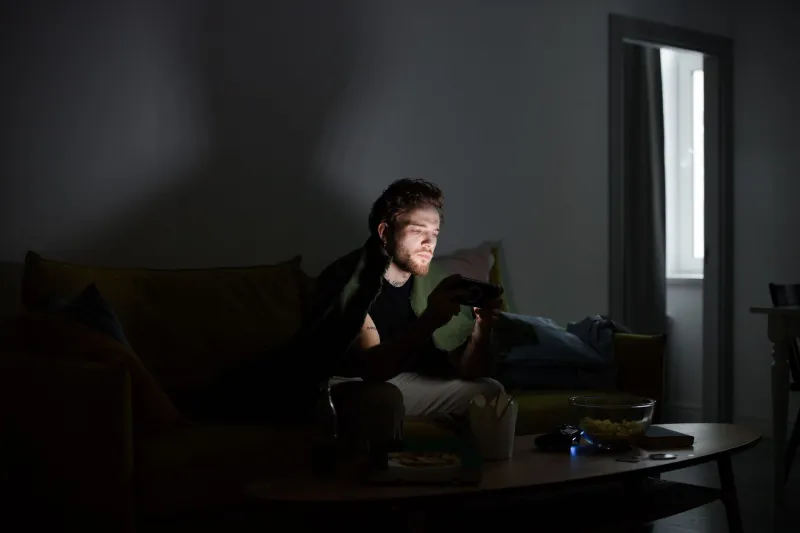
The typical late-night after-pub pokies session — midnight, a few drinks down, lying on the couch with your phone — is probably the single worst mental state in which to be making real-money gambling decisions. And yet it's one of the most common scenarios on Australian platforms, partly because mobile accessibility makes it so frictionless.
This is exactly what payment systems like PayID were designed to facilitate: instant deposits, no waiting, no friction. That convenience is genuinely useful in many contexts, but in this particular context — impaired, tired, emotionally reactive — it removes one of the few natural brakes on impulsive spending.
Recognising the State You're In
The frustrating truth about impaired decision-making is that it reduces your ability to recognise that your decision-making is impaired. That's not a paradox — it's just how the prefrontal cortex works. When it's running below capacity, one of the things it does poorly is accurately assess its own performance.
So relying on yourself in the moment to think hmm, maybe I shouldn't play right now isn't a reliable strategy. The better approach is to build rules that operate before you get into those states:
Set a hard rule about post-drinking play. Not a guideline — a rule. Something like: no pokies after more than two drinks, full stop. Rules are easier to follow than in-the-moment judgements, especially when your judgement is compromised.
Use deposit limits that reset daily. If you've already hit your daily limit before the late-night session begins, the decision is made for you. Most reputable Australian platforms offer this under their responsible gambling tools.
Delete the app from your home screen. This sounds trivial, but the extra friction of finding the app in a folder or having to re-download it can be enough to interrupt an impulsive late-night decision.
Tell someone. If you live with a partner or housemate, letting them know you're trying to avoid late-night sessions creates a layer of social accountability that's surprisingly effective.
The Bottom Line
Online pokies are designed to be played in your living room, on your couch, at whatever hour you happen to feel like it. That accessibility is one of their genuine appeals. But the same biology that makes a relaxed Friday night feel like a good time to spin also makes it one of the riskier times to be making financial decisions.
You don't have to give up evening sessions to play responsibly. But knowing what's actually happening in your brain when you're tired, when you've had a few, or when it's both — that knowledge is worth a lot more than any welcome bonus a platform can offer you.