Your Favourite Songs Are Quietly Keeping You at the Reels Longer Than You Think
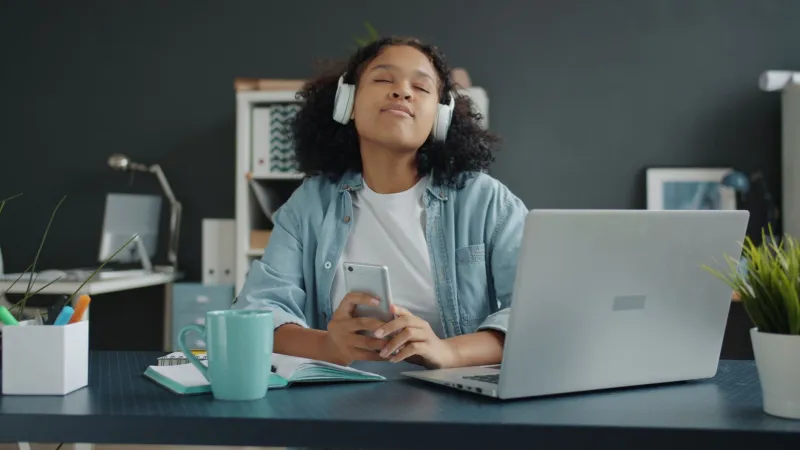
Most Aussie players have done it. You load up your favourite online pokies site, minimise the game volume, and throw on a playlist — something familiar, something comfortable. Maybe it's a Friday night vibe. Maybe you just can't stand the repetitive jingles. Either way, it feels like a smart move. Less noise, more chill.
But here's the thing nobody really talks about: that playlist might be one of the biggest reasons your sessions keep running longer than you planned.
The Sounds Pokies Use Aren't Random
Before we get into the music side of things, it's worth understanding what you're actually switching off when you mute the game.
Online pokies are built with sound design that's anything but accidental. Every chime, every near-miss buzz, every coin-cascade effect has been deliberately engineered to keep your attention locked in and your emotional state primed for another spin. Game developers spend serious money on this. The audio cues are designed to create micro-moments of excitement, signal potential wins even when there aren't any, and — crucially — compress your sense of time.
When you're hearing those sounds, your brain is constantly being nudged. The audio acts as a kind of cognitive anchor, keeping part of your attention tethered to the game itself. That tethering has a side effect: it makes you more aware of the passage of time, even if only slightly. You notice the rhythm of the spins. You feel the session moving.
Turn that off, and something shifts.
Familiar Music Does Something Specific to Your Brain
When you throw on a playlist you actually enjoy — your go-to workout mix, a comfort album, whatever it is — your brain engages with it differently than it processes unfamiliar background noise. Songs you know trigger memory, emotion, and a kind of automatic processing that's deeply absorbing without feeling demanding.
That's the problem.
Familiar music essentially occupies the part of your brain that would otherwise be tracking time and context. Psychologists call this "temporal absorption" — the way emotionally engaging audio warps your perception of duration. You've probably experienced it outside of gaming. An hour-long drive flies by when you're singing along to a great album. A boring meeting crawls when there's nothing to distract you.
At the pokies, that same effect means you lose the internal clock you'd otherwise rely on to gauge how long you've been playing. One song bleeds into the next. The playlist loops. And before you've registered it, what felt like 20 minutes was actually closer to an hour.
The Disconnect Between Your Mood and Your Spending
There's another layer to this that's worth flagging. When you're listening to music you enjoy, your general mood tends to lift — or at least stabilise. That's not a bad thing on its own. But in the context of online pokies, a lifted mood can quietly lower your guard around spending decisions.
You're relaxed. The music feels good. The spins feel like they're happening in a comfortable, familiar space rather than an intense gambling environment. That emotional softening can make it harder to register the point where you'd normally pause and check yourself — the moment where you'd think, hang on, how long have I been at this?
The in-game audio, irritating as it can be, serves a subtle function here: it keeps reminding you that you're in a gambling environment. Strip that away and replace it with your favourite playlist, and the psychological framing of the session changes. It starts to feel less like gambling and more like chilling out with some background entertainment that happens to involve a game.
That reframing is where extended sessions quietly begin.
It's Not Just Spotify — Any External Audio Does This
The same dynamic applies to other forms of background entertainment. Throwing on a podcast, a Netflix show in another tab, or even background TV creates a similar effect — though music tends to be the most seamless at merging with the gaming experience without demanding too much attention.
Podcasts, for example, can actually pull your attention away from the game in a more disruptive way, which might paradoxically make you more aware of time passing. Music, by contrast, tends to sit just below the level of conscious attention, doing its time-warping work without you noticing.
Streaming a show while playing is a slightly different situation, but the underlying principle holds: whenever you're adding an external layer of entertainment that you genuinely enjoy, you're reducing the cognitive friction that would otherwise signal it's time to stop.
Simple Habits That Can Help
None of this means you need to suffer through pokies audio if you genuinely can't stand it. But it does mean it's worth being deliberate about how you use external entertainment during a session.
A few things that can help:
Set a time limit before the playlist starts. Decide on a session length before you even open the game. Use your phone's clock or a simple timer — something external to the game itself. Don't rely on the music to give you any sense of time, because it won't.
Use playlists with a defined end. Instead of putting Spotify on shuffle or hitting repeat, create a playlist that runs for exactly the amount of time you're comfortable playing. When the music stops, the session stops. It sounds simple, but having that audio endpoint can act as a genuine circuit-breaker.
Check your balance at the start of each new song. It sounds odd, but anchoring a balance check to a musical cue gives you a regular, automatic prompt to stay aware of what you're spending — something the music itself will otherwise obscure.
Don't use music to avoid the game's sounds entirely. If the sound design of a particular pokie bothers you, that discomfort might actually be useful information. It's keeping you alert. Consider whether muting it completely is genuinely improving your experience or just making it easier to stay longer than you should.
The Bigger Picture
Online pokies are already designed to extend play. That's not a secret — it's built into the product. The sound design, the visual loops, the near-miss mechanics all work together toward that goal. When you add your own layer of engaging audio on top, you're not neutralising those effects. You're replacing one form of time distortion with another, and the one you've chosen is often more effective.
Being a smarter player doesn't always mean understanding volatility or RTP (though those matter too). Sometimes it means noticing the small environmental choices — like what's playing in your earbuds — that quietly shape how long you stay at the reels.
Your playlist isn't the enemy. But it's not neutral either.